

Toothpaste against screen scratches — does it really work?
Short answer: no. Toothpaste does not remove a scratch, it sands the area around it. What looks smoother afterwards is in fact a damaged surface. Here is what happens inside the groove and why filling it is the only sensible route.
The short version
- Toothpaste is abrasive — it removes material instead of filling the scratch.
- It destroys the oleophobic coating first: fingerprints stick more afterwards.
- The scratch stays visible and a hazy film is added on top.
- Scratches only disappear optically when the groove is filled with a material that refracts light like glass.
Why a scratch is visible at all
A scratch is a narrow groove with irregular edges. When light hits those edges it scatters in all directions instead of reflecting cleanly. That is why a scratch flares up in sunlight while it is barely noticeable on a dark screen.
There are exactly two ways to end that effect: grind away enough surrounding glass for the groove to disappear — or fill the groove with a material that refracts light like glass. On display glass the first option is off the table.
Display glass is too thin to grind
Hardened display glass is usually less than a millimetre thick and carries an ultra-thin oil-repellent coating. Any removal changes the optics permanently, lowers break resistance and costs you that coating first.
Every household remedy checked
Toothpaste
Contains cleaning particles designed to rub off plaque. On glass they create countless micro-scratches. The display looks dull afterwards and the original scratch is still there.
Baking soda paste
Coarser than toothpaste and uneven in grain size. Powder can also get into speakers, the charging port and seals.
Car polish and grinding paste
Developed for thick car glass and paint. On display glass the removal is far too aggressive — in the worst case you get visible distortions.
Oil, petroleum jelly, wax
Fills the groove briefly and looks like a success for a few minutes. It never cures, attracts dust and is gone after the next wipe.
UV resin with a matching film
Applied as a liquid, spread into the groove under the film and cured with UV light. Its refractive index is close to glass, so the scratch edge becomes optically neutral — with no material removal and fully reversible.
Stunning results!
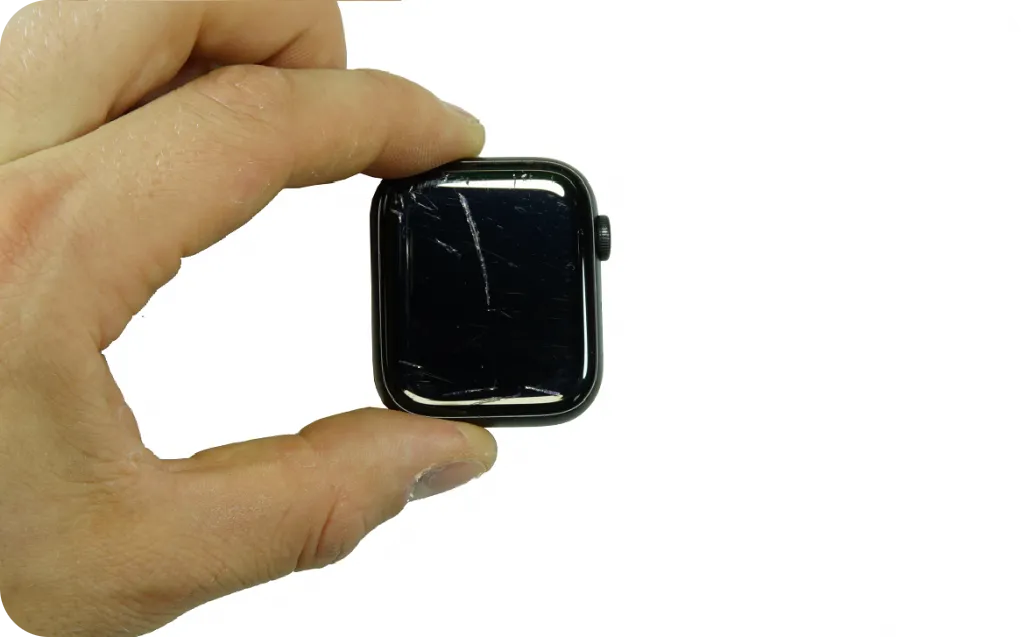
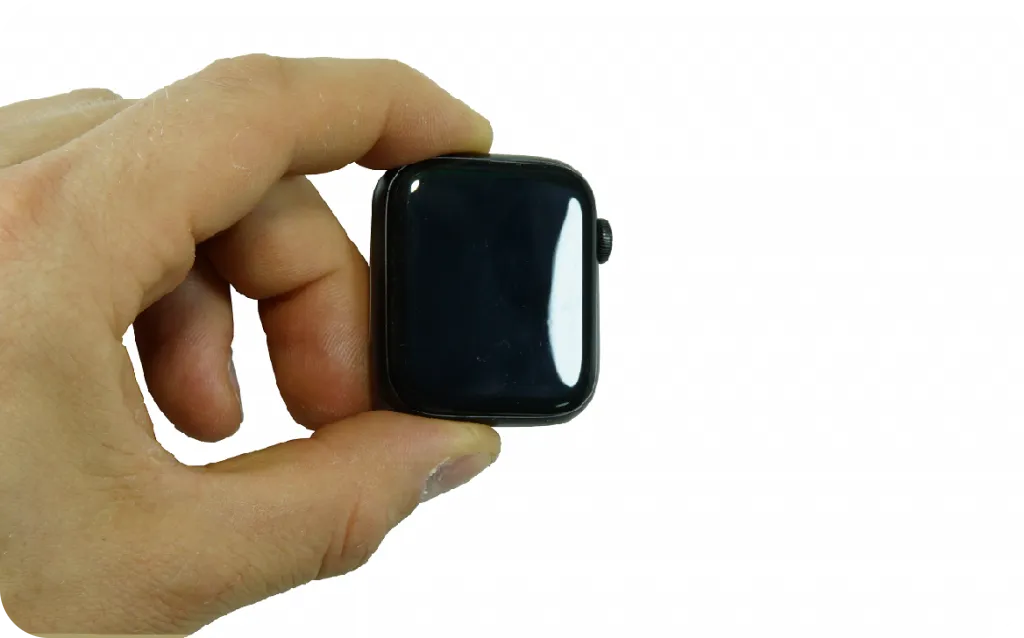 BeforeAfter
